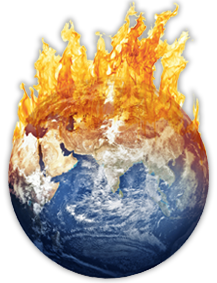
United Nations Study on Global Warming
On Feb. 2, 2007, the United Nations scientific panel studying climate change declared that the evidence of a warming trend is "unequivocal," and that human activity has "very likely" been the driving force in that change over the last 50 years. The last report by the group, the Intergovernmental Panel on Climate Change, in 2001, had found that humanity had "likely" played a role.
The addition of that single word "very" did more than reflect mounting scientific evidence that the release of carbon dioxide and other heat-trapping gases from smokestacks, tailpipes and burning forests has played a central role in raising the average surface temperature of the earth by more than 1 degree Fahrenheit since 1900. It also added new momentum to a debate that now seems centered less over whether humans are warming the planet, but instead over what to do about it. In recent months, business groups have banded together to make unprecedented calls for federal regulation of greenhouse gases. The subject had a red-carpet moment when former Vice President Al Gore's documentary, "An Inconvenient Truth," was awarded an Oscar; and the Supreme Court made its first global warming-related decision, ruling 5 to 4 that the Environmental Protection Agency had not justified its position that it was not authorized to regulate carbon dioxide.
Read More...
The greenhouse effect has been part of the earth's workings since its earliest days. Gases like carbon dioxide and methane allow sunlight to reach the earth, but prevent some of the resulting heat from radiating back out into space. Without the greenhouse effect, the planet would never have warmed enough to allow life to form. But as ever larger amounts of carbon dioxide have been released along with the development of industrial economies, the atmosphere has grown warmer at an accelerating rate: Since 1970, temperatures have gone up at nearly three times the average for the 20th century.
The latest report from the climate panel predicted that the global climate is likely to rise between 3.5 and 8 degrees Fahrenheit if the carbon dioxide concentration in the atmosphere reaches twice the level of 1750. By 2100, sea levels are likely to rise between 7 to 23 inches, it said, and the changes now underway will continue for centuries to come.